Introduction
You're standing in the living room, staring at water stains on the ceiling from a roof that's needed replacing for two years. The carpet is original to 1987. Part of you wonders if anyone would even buy this place.
Here's the truth: someone will buy it. The question is who, and at what price.
"Poor condition" isn't one thing. A house with dated wallpaper and worn carpet is a very different sale than one with a collapsed foundation or active mold. Each category attracts a different buyer pool and demands a different pricing strategy.
This guide breaks down what "poor condition" actually means and the steps to sell a distressed property. You'll also see how to choose between repairing and selling as-is, plus the three main selling paths for Atlanta-area homeowners.
Key Takeaways
- Poor condition falls on a spectrum: livable-but-dated, major repairs needed, or uninhabitable
- As-is sales are legal, but you must still disclose known defects
- Structural or safety issues often block conventional financing and shrink your buyer pool
- Your path can run from a full agent listing to a fast cash sale, based on timeline and budget
- Local cash buyers like Community Home Buyers of Atlanta buy homes in any condition, with no repairs or fees
What Does "Poor Condition" Really Mean?
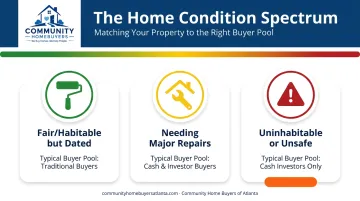
Real estate professionals don't treat "poor condition" as a single label. They break it into categories, and the category a house falls into directly shapes pricing, marketing, and who's even eligible to buy it.
Fair or Habitable but Dated
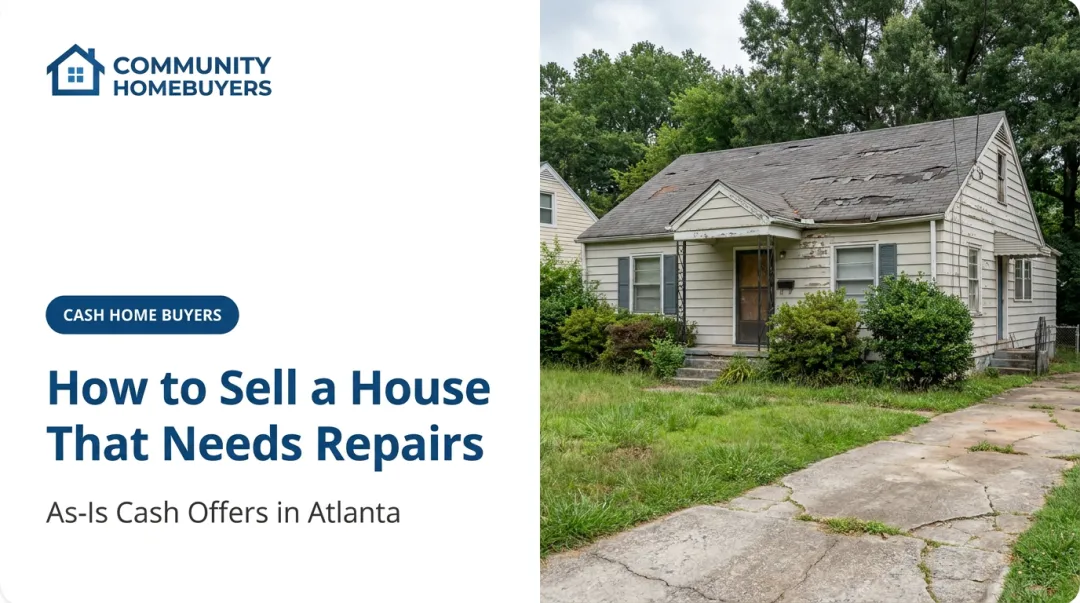
These homes are structurally sound and safe. The issues are cosmetic: outdated kitchens, worn flooring, dated paint colors, or a bathroom that hasn't been touched since the Reagan administration. Buyers can move in immediately, even if they plan to renovate later.
Needing Major Repairs
This tier includes roofing failures, plumbing problems, or electrical issues that make a house livable but risky. Here's where financing gets complicated:
- Fannie Mae and Freddie Mac treat significant deferred maintenance or safety-related defects (C5/C6) as ineligible for conventional financing until repairs meet a minimum standard
- FHA and VA appraisers apply similar logic, flagging anything that threatens livability or structural integrity
What this means practically: a house needing a new roof or foundation work often can't be bought with a traditional mortgage, at least not until repairs happen. That single fact pushes many of these sales toward cash buyers.
Uninhabitable or Unsafe
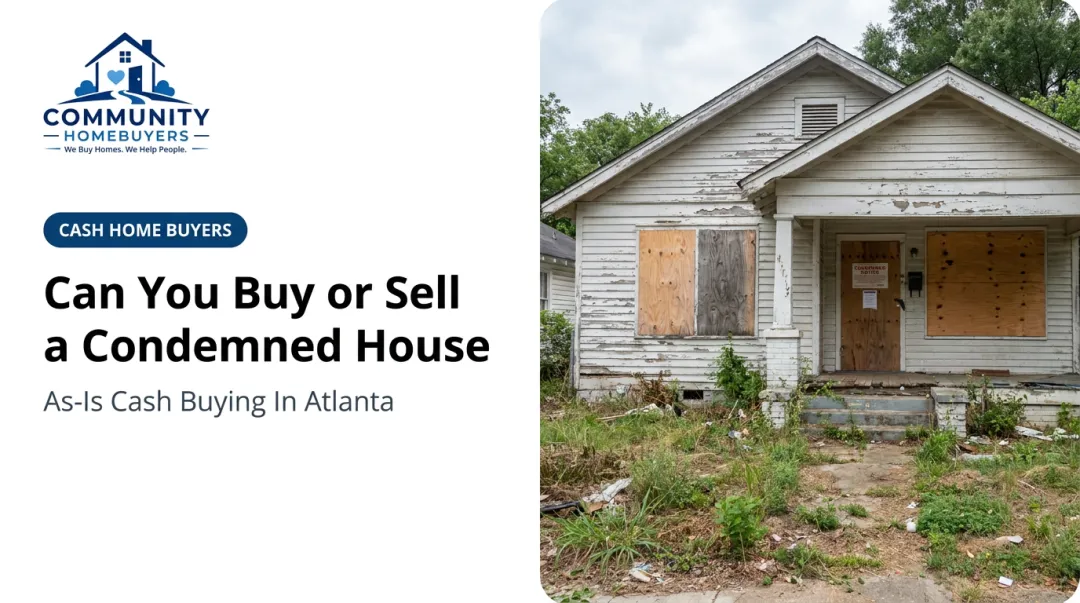
Can a house be too far gone to sell? Not really. Homes with mold, active code violations, or even a formal condemnation order can still change hands.
They just sell to a narrower pool, usually cash investors, since conventional lenders won't touch a property in its current state. Condemnation status still needs to be disclosed to any buyer, but it doesn't legally block a sale.
How to Sell a House in Poor Condition: Step-by-Step Guide
Selling a distressed home is possible. It just follows a different sequence than a typical listing.
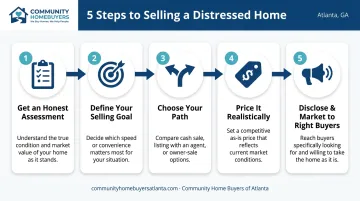
Step 1: Get an Honest Assessment
Before pricing anything, get a pre-listing inspection. A general home inspection runs $296 to $424 on average, according to Bankrate's 2025 analysis, though structural, septic, or radon add-ons cost more. This step surfaces safety and disclosure issues before a buyer's inspector finds them and blows up your negotiation.
Step 2: Define Your Selling Goal
Speed, maximum price, and minimal effort rarely align. Decide which one matters most. That single decision drives everything that follows, from pricing to which buyers you target.
Step 3: Choose Your Path
Your goal points to one of three paths:
- Full repair — chase top dollar if you have time, cash, and contractor bandwidth
- Cosmetic touch-up — cheap fixes (paint, cleanout, curb appeal) to widen the buyer pool
- Sell as-is — skip repairs and trade some price for speed and certainty
Step 4: Price It Realistically
Price against comps that match the path you chose—similar condition, not fully renovated homes down the street. As-is and fixer-upper listings typically sell below renovated market value, so remodeled comps set you up for disappointment.
Step 5: Disclose, Then Market to the Right Buyers
Regardless of how you sell, you're legally required to disclose known material defects before you market the home.
Then match the channel to your likely buyer:
- MLS / agent listing — broad exposure when the home can still qualify for financing
- Investor networks — buyers who expect repairs and move faster than retail
- Direct cash buyers — strongest fit when speed, condition, or certainty matter more than max price
Repair, Cosmetic Fix, or Sell As-Is? Key Factors to Weigh
There's no universal right answer. Which path wins depends on how you weigh five factors.
Cost vs. Return on Investment
Small cosmetic fixes tend to pay off. Cleaning, decluttering, and fresh paint often return more than they cost.
Major repairs are a different story. According to the 2024 Cost vs. Value report from JLC, typical cost recovery looks like this:
- Minor kitchen remodel: about 96%
- Asphalt roof replacement: roughly 57%
- Metal roof replacement: about 48%
Bigger repairs rarely pay for themselves dollar-for-dollar.
Timeline and Urgency
Repairs mean waiting on contractor schedules, permits, and material delays, often weeks to months. As-is listings can go to market immediately.
Buyer Pool and Financing Limitations
As covered above, most conventional lenders won't finance homes with major structural or safety issues. That pushes these sales toward cash and investor buyers by default.
Seller's Capacity and Circumstances
Inherited property, probate, divorce, or advanced age often make managing a renovation impractical. If you're not local, don't have the cash reserves, or simply don't want the hassle, an as-is sale removes that burden entirely.
Local Market Conditions
A hot seller's market absorbs as-is listings fast because buyers have fewer options overall. A slower market, with more inventory and pickier buyers, often requires at least some repairs to stay competitive.
Your Selling Options: Agent, FSBO, or Direct Cash Buyer
Once you know your goal, pick the transaction method that fits.
Traditional Agent-Assisted Sale
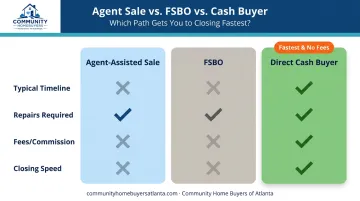
An agent brings broader buyer exposure and pricing expertise. The tradeoff: showings, repair contingencies, and a longer timeline. Financed sales typically take 30-45 days to close after going under contract, and a distressed home may sit longer waiting for the right financeable buyer.
For Sale By Owner (FSBO)
Skipping the agent saves on commission, but you handle disclosure, marketing, and negotiation alone. That's a heavier lift with a distressed property, where buyers ask harder questions and expect more transparency.
Direct Cash Home Buyer
This model looks nothing like a traditional sale:
- Cash offer, often within 24-48 hours
- No repairs, cleaning, or staging required
- No inspections or financing contingencies to satisfy
- Closing possible in about a week
For a house in poor condition, that path often matters most: you sell as-is and skip the repair-and-showing cycle.
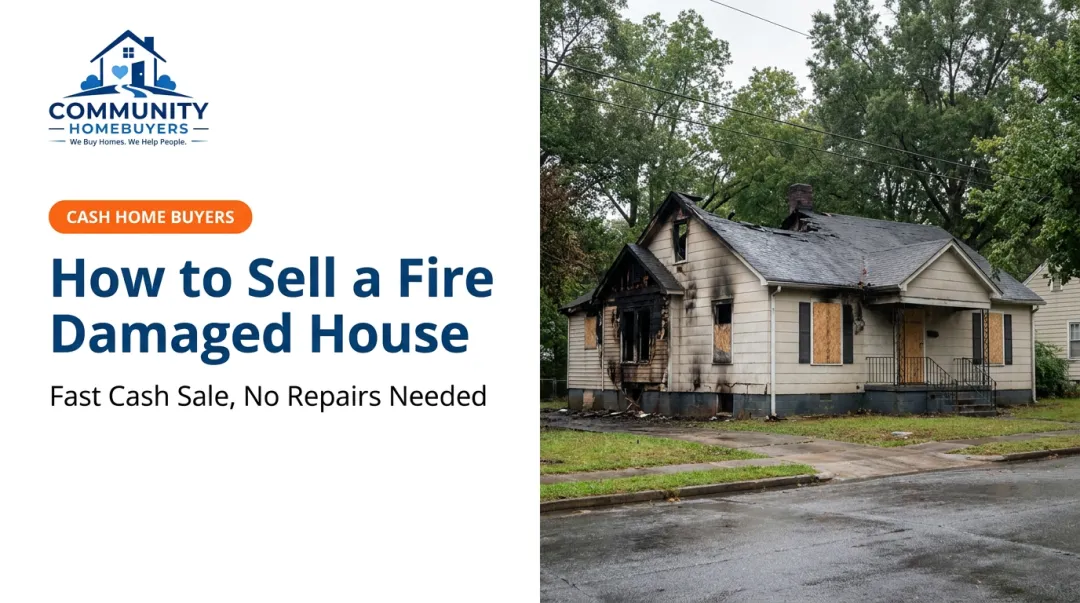
Community Home Buyers of Atlanta works this way for homeowners across Atlanta, Decatur, Forest Park, and Jonesboro. The family-owned company buys homes in any condition, including fire-damaged, tenant-occupied, or fully uninhabitable properties.
There's no commission, no fee, and the company covers closing costs. Sellers pick their own closing date—seven days out, or several weeks later while they line up a new place. If foreclosure is part of the picture, the company can also work directly with your lender once a sale is underway.
You can reach out for a cash offer and see the number before deciding. One practical note: cash offers vary between investors, so get two or three before signing anything.
Common Mistakes to Avoid When Selling a Distressed Property
A few missteps show up again and again with distressed home sales—and they usually cost time, money, or both:
- Hiding known defects instead of disclosing them. Skipping disclosure doesn't make the problem disappear; it just moves the liability to after closing, when it's far more expensive to deal with.
- Overpricing based on renovated comps. Pricing a fixer-upper like the fully remodeled house down the street leads to weeks of no offers, then a price cut anyway. Price against similar homes in like condition from the start.
- Accepting the first offer without comparison. Whether it's one agent or one investor, a single data point rarely reflects your home's real value. Two or three offers almost always surface a better deal.
- Pouring money into repairs before you sell. Big pre-sale renovations rarely return dollar-for-dollar on a distressed property, and they delay closing when a buyer would take the house as-is.
Frequently Asked Questions
Can homes be unfit to sell?
Almost never. Even condemned or uninhabitable homes can usually still be sold to cash investors who buy as-is. You must still disclose condemnation status to any buyer.
When's the worst time to sell a house?
Slower seasons and buyer's markets extend time on market, which hits poor-condition homes harder than move-in-ready ones. Pricing and timing strategy matter more when your property already has a smaller buyer pool.
What does "poor condition" mean?
It's a spectrum, from dated-but-livable to needing major repairs to fully uninhabitable. The specific category should guide your pricing and which buyers you target.
What is the best way to sell a house that needs repairs?
It depends on your goals. Selling as-is to a direct cash buyer like Community Home Buyers of Atlanta is fastest. Completing repairs before listing can raise the price if you have the time and budget.
Do I have to disclose problems when selling a house as-is?
Yes. Disclosure laws still require revealing known material defects, even in an as-is sale. "As-is" affects repair obligations, not your legal duty to disclose.
How much less does a house in poor condition sell for?
Severity drives the discount. Zillow's 2025 analysis found fixer-uppers sold about 7.3% below similar homes, and homes needing work sold roughly 8% below expected price—more than $28,000 on a typical U.S. home.