
Atlanta homeowners search for this option when life gets complicated. Maybe you're facing a foreclosure deadline. Maybe you inherited a house nobody wants to fix up. Divorce, fire damage, a tenant who trashed the place, or a home so outdated it won't qualify for traditional financing — these situations all point toward the same solution.
This guide walks through the exact steps to sell fast as-is, what actually affects your offer price, mistakes that cost sellers money, and a few alternative paths worth considering before you sign anything.
Key Takeaways
- Direct cash sales close in 7-21 days, versus 30-60+ days for an MLS listing
- Cash buyers pay below market value but skip repairs, commissions, and carrying costs
- No cleaning, staging, or agent fees are required with a direct cash buyer
- Georgia is a "buyer beware" state, but you must still disclose known material defects
- Vetting your buyer matters more than chasing the absolute fastest closing date
How to Sell Your House Fast As-Is: Step-by-Step Process
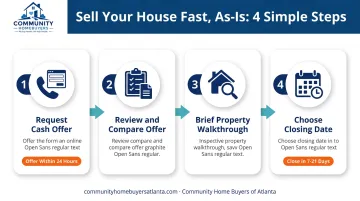
Step 1: Request a Cash Offer or Contact a Direct Buyer
You start by submitting basic property details online or over the phone. No cleaning. No repairs. No staging beforehand.
Most direct buyers ask for:
- Property address
- Brief condition overview (optional, but helpful)
- Reason for selling
- Timeline needs
Community Home Buyers of Atlanta, a family-owned local buyer, keeps this step simple: fill out a short form with your address and contact info, then a team member calls to learn more about your situation. They typically present a cash offer within 24 hours of receiving your property information.
Phone inquiries tend to get faster responses than emails, so calling directly is worth it if speed matters to you.
Step 2: Review and Compare the Offer
A transparent as-is cash offer should show the actual number you'll walk away with. No hidden deductions.
Look for these details in any offer breakdown:
- Zero commissions — traditional agent sales run up to 6% in fees
- Closing costs covered by the buyer, not you
- No repair costs subtracted after the fact
- No appraisal contingency since there's no bank involved
Compare the net proceeds against what a repaired, agent-listed sale would actually net you once you subtract repair costs, commissions, and months of carrying costs like mortgage payments, taxes, and insurance. Also ask about contingencies. Offers with fewer strings attached close faster and fall through less often.
Step 3: Schedule a Brief Property Walkthrough
This step is simply a quick visit to confirm the home matches what you described, not a lender appraisal.
Visible issues like foundation cracks, roof damage, fire damage, or mold may adjust the offer slightly. They won't disqualify the sale. Direct buyers purchase homes in any condition, including properties that need a complete remodel.
One important note: disclose known material defects upfront. It saves you from renegotiation later and protects you legally, a point we'll cover more in the mistakes section below.
Step 4: Choose Your Closing Date and Finalize the Sale
Once you accept the offer, you pick the closing date. Some sellers close in as little as 7 days. Others need more runway to line up their next move, and reputable buyers will work around that.
A few Georgia-specific details to know:
- Georgia law requires a licensed attorney to control closing; per a 2025 State Bar opinion, this can happen remotely by video
- Closing happens at a local title company, not a bank branch
- Some buyers, including Community Home Buyers of Atlanta, allow sellers to stay in the home briefly after closing while they finalize their relocation plans
When Selling As-Is Fast Is the Right Move
Speed isn't automatically the best choice for every seller. It depends on your urgency, your property's condition, and what you actually need out of the sale.
Selling fast as-is tends to make sense when:
- You inherited a property with years of deferred maintenance and no interest in managing repairs
- Pre-foreclosure or a tax lien is creating a hard deadline
- You're relocating for a job and can't manage a drawn-out listing process
- The home has major issues (fire damage, foundation problems, mold) that would scare off traditional financed buyers
- You're a landlord dealing with problem tenants and want out without a lengthy eviction-then-list process
If any of these situations sound familiar, a direct cash buyer like Community Home Buyers of Atlanta can close in as little as 7 days without requiring repairs or agent fees.
When It Might Not Be the Right Move
If you have 6+ weeks of runway and a livable home, an as-is MLS listing could net you more money despite the longer wait.
Georgia homes sold for an average of 95.4% of original list price in 2025, according to Georgia Realtors data. A well-priced as-is listing can still perform reasonably well if you have the time to wait it out.
What Affects Your Cash Offer When Selling As-Is Fast
Cash offers aren't random numbers. They're built using a formula that factors in repair costs, resale margin, and how fast the buyer needs to move.
Property Condition and Repair Scope
Bigger repair needs mean a lower offer. Roof replacements, foundation work, and termite damage (common in Georgia's humid climate) all eat into an investor's margin.
Professional investors commonly cap their offers using what's known as the 70% rule: no more than 70% of the home's after-repair value, minus estimated repair costs, according to Investopedia's breakdown of the formula. That's after-repair value, not current market value, so a larger repair estimate lowers the offer dollar for dollar.
Local Market Demand and Investor Activity
More investor competition in your area generally means more offers to compare. Investors made up 21% of Atlanta-area home purchases in Q1 2026, according to Redfin's investor purchase report. That's meaningful local demand, though the share has fluctuated year to year as market conditions shift.
Buyer Type Selected (Local Investor vs. iBuyer vs. As-Is MLS Listing)
Each buyer type prices risk differently:
| Buyer Type | Pricing Basis | Best For |
|---|---|---|
| Local cash investor | After-repair value minus repairs | Any condition, fastest close |
| National iBuyer | Algorithmic offer, service fees apply | Homes already in good shape |
| As-Is MLS listing | Market comparables, list price | Sellers with time to wait |
Nationally, all-cash purchases averaged a 9% discount versus financed purchases in 2025, up from just 4% in 2021, according to Realtor.com's analysis of Cotality data. That figure reflects the broader cash market rather than distressed-specific sales, and it shows the discount trend widening.
Timeline Flexibility and Contract Contingencies
Waiving inspection or financing contingencies speeds up closing, but it also shifts negotiating leverage toward the buyer. If you need extra time to move or additional flexibility written into the contract, expect a minor adjustment to the offer. That reflects a fair trade for the added flexibility.

Common Mistakes to Avoid When Selling As-Is Fast
A rushed decision can cost you more than the days you save. Watch out for these:
- Skipping buyer verification. Check for a real local office address, online reviews, and proof of funds before signing anything
- Not disclosing known defects. Georgia follows caveat emptor, but sellers who know of a hidden defect must still disclose it to avoid legal liability
- Accepting the first offer. Compare at least 2-3 cash offers, and consider having a real estate attorney review the purchase agreement before signing
- Confusing "as-is" with "no negotiation." Buyers can still request price or credit adjustments after inspection; "as-is" limits repair obligations, not conversation
Alternatives to Selling As-Is Fast
A direct cash sale isn't the only path. If your timeline allows for it, these options are worth weighing.
Listing As-Is on the MLS with an Agent
- Best for sellers with 6+ weeks of runway who want maximum market exposure
- Showings, inspection negotiations, and agent commissions cut into your net proceeds
- The process simply takes longer than a direct cash sale
Making Low-Cost, High-Impact Repairs Before Selling
- Small fixes like fresh paint or updated fixtures can widen your buyer pool
- Requires upfront cash and time; rarely worth it for major structural problems
Nationally, an upscale primary-suite addition recouped just 18% of its cost at resale, according to JLC's 2025 Cost vs. Value report.
Big renovations before a sale are a gamble, not a guarantee.
National iBuyer Programs
- Works well for homes already in decent shape, located in a metro area an iBuyer serves
- Ideal if you want a fully digital, hands-off process
- Charges service fees and only buys homes meeting strict condition requirements
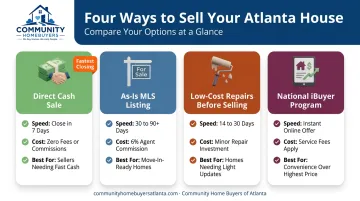
Local direct buyers, by contrast, purchase properties in any state of disrepair.
Frequently Asked Questions
What is the fastest way to sell a house as is?
A direct cash sale to a local buyer is typically fastest, often closing in 7-21 days with an offer delivered within 24-48 hours of contact.
Why is my home taking so long to sell?
Common culprits include overpricing, condition issues without as-is pricing adjustments, a limited buyer pool at your price point, or listing during a slower season like late fall or winter.
What not to do before you sell your house?
Avoid major renovations that rarely recoup their cost, hiding known defects, or signing with an unverified cash buyer without checking references or proof of funds.
What is the hardest month to sell a home?
Zillow's market data shows January has the slowest buyer activity nationally, while ATTOM's seasonal report points to October and September as carrying the lowest price premiums. "Hardest" depends on whether you mean speed or price.
Do I have to disclose problems when selling a house as-is in Georgia?
Georgia is a caveat emptor state with no mandatory disclosure form, but you must still disclose known material defects the buyer wouldn't otherwise discover. Skipping this can create legal liability.
How much less money will I get selling my house as-is for cash?
Cash offers typically come in below full market value since the buyer absorbs all repair and resale risk. Many sellers find the gap gets offset by savings on repairs, commissions, and months of carrying costs.