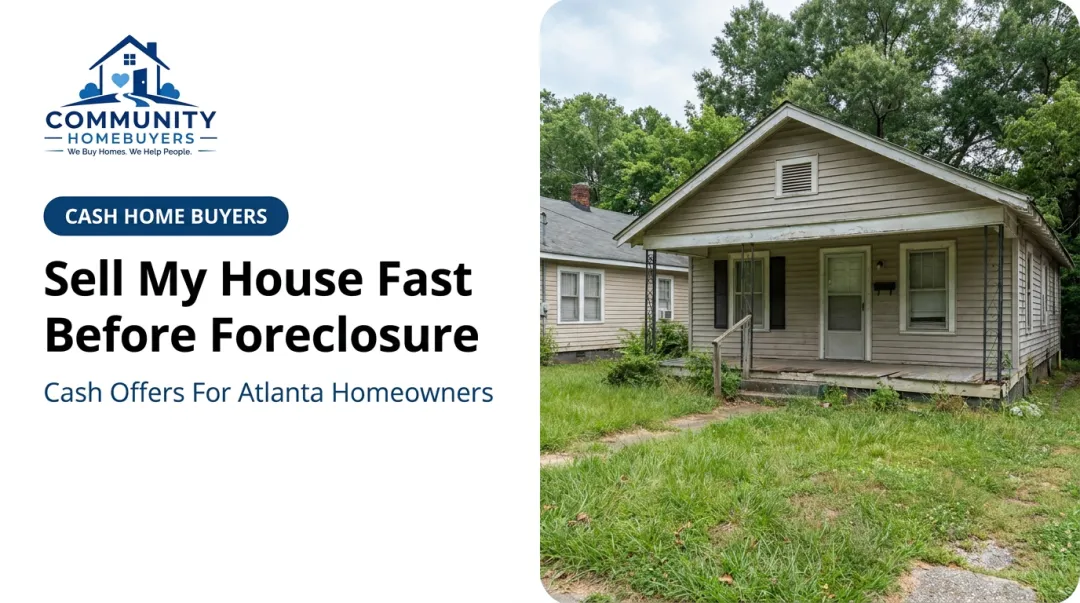

If you're in this spot, you've probably asked yourself: can you actually sell a home that's already in foreclosure?
The answer is yes. In most cases, homeowners can sell their property at any point before the foreclosure auction is finalized. You still own the home, and you still have the right to sell it.
What matters most is timing. Understanding which foreclosure stage you're in, and knowing your options, including a fast cash sale, can mean the difference between walking away with money in your pocket or losing everything to the bank.
Key Takeaways
- You can sell anytime before the auction, but the clock is your biggest obstacle
- Selling during pre-foreclosure protects more equity and does less damage to your credit than a completed foreclosure
- Main paths out: a traditional agent-listed sale, a short sale, or a fast as-is cash sale
- Q4 2025 foreclosures averaged 592 days nationally; state timelines vary widely (ATTOM)
Understanding the Foreclosure Timeline
Foreclosure isn't a single event. It's a legal process with distinct stages, and lenders generally can't jump straight to auctioning your house the moment you fall behind.
Under federal Regulation X, mortgage servicers typically cannot begin the first foreclosure notice or filing until a loan is more than 120 days delinquent (CFPB). That's roughly four missed payments, not a single late payment or even a stern phone call.
Once foreclosure does begin, how fast it moves depends heavily on where you live. In Georgia, for example, lenders must send written notice at least 30 days before the sale, advertise the sale for four consecutive weeks in the county newspaper, and hold the auction on the courthouse steps on the first Tuesday of the month.
Other states move far slower. Some foreclosures nationally have dragged on for years, while non-judicial states like Texas or West Virginia can finish the process in under six months.
Pre-Foreclosure Stage
This is the window between a missed-payment notice and the filing of a Notice of Sale. You still control the home completely: no court order, no bank interference, and no forced timeline.
This is the best time to sell. You have room to:
- Price from market comps or a realistic as-is cash offer
- Skip repairs if money or time is tight
- Choose an open-market listing or a direct cash sale
- Negotiate a payoff figure directly with your lender
Notice of Sale and Scheduled Auction
Once the Notice of Sale is filed and publicly recorded, things speed up. You can still sell, but now there's a hard deadline: the sale must close before the auction date, or you lose the right to sell independently.
This is when many homeowners feel pressure to take the first offer and risk leaving equity behind. A buyer who can purchase as-is and close before the auction date matters more than a higher price that cannot fund in time.
Real Estate Owned (REO) : The Point of No Return
If the home doesn't sell at auction, the lender takes it back and it becomes REO, or bank-owned. At this point, you no longer have any ownership rights or ability to sell.
There's no walking it back. Once REO happens, whatever equity you had is gone.

Yes, You Can Sell During Foreclosure — Here's Why It Matters
Here's something a lot of homeowners don't realize: you retain full legal ownership until the auction is finalized. That means you can list, negotiate, and close a sale right up until the gavel drops. There's typically no legal requirement to disclose your foreclosure status to buyers, either (though your agent or buyer will likely see the recorded notice during title work).
Lenders usually prefer a sale over completing foreclosure. Foreclosing costs banks money in:
- Legal fees and court costs
- Property upkeep while the home sits vacant
- Lost interest income on the loan
Many will pause proceedings if you can show a legitimate, in-progress sale.
Equity is the real prize here. Nearly 45% of mortgaged homes nationally carry at least 50% equity as of late 2025 (ATTOM). If that describes your situation, a timely sale could mean walking away with a meaningful check instead of losing the house outright.
The catch? Timing punishes procrastination. Wait until 30 days before the auction, and you're negotiating from desperation, not strength. Buyers and investors recognize a distressed timeline, and lowball offers tend to follow. Acting even a few weeks earlier preserves leverage and protects the equity you've built.
Your Options for Selling a Home in Foreclosure
Not every path works for every situation. Here's how the three main routes stack up.
Traditional Sale With a Real Estate Agent
This works best when you have ample time before the auction and enough equity to cover the mortgage payoff, agent commissions, and closing costs.
An agent experienced in distressed sales can:
- Negotiate directly with your lender on your behalf
- Price the home aggressively to sell within a few weeks, not months
- Handle showings and paperwork while you focus on next steps
The tradeoff is time. Even a fast traditional sale usually takes several weeks from listing to closing table.
Short Sale
A short sale means selling for less than what you owe, with your lender's approval and documented proof of financial hardship.
- Pro: Less damaging to your credit than a completed foreclosure
- Con: Lengthy, paperwork-heavy approval process that can take months
Forgiven mortgage debt may count as taxable income unless an IRS exception applies. The qualified-principal-residence exclusion doesn't cover discharges finalized after December 31, 2025 (IRS Publication 4681).
If your auction date is weeks away, not months, a short sale's timeline can be a serious liability.
Selling As-Is to a Cash Home Buyer
When time is short, repairs aren't realistic, or you can't manage showings and negotiations, a direct cash buyer is often the fastest way out.
Community Home Buyers of Atlanta is a family-owned company that buys houses directly from Atlanta-area homeowners, including those in active foreclosure. Their process is built for speed:
- Cash offers delivered within 24 hours of submitting your property details
- Closings possible in as little as 7 days
- No commissions, no repairs, no cleaning, no showings
- The company covers closing costs, and the offer you accept is the amount you receive
They also work directly with lenders to help delay foreclosure proceedings once a sale is underway. That gives homeowners in Atlanta, Decatur, Forest Park, and Jonesboro a realistic shot at settling the mortgage before the auction date.

Steps to Sell Your Home Before Foreclosure
Acting early gives you more options and a better chance of limiting credit damage. Move through these steps as soon as foreclosure risk shows up.
- Call your lender immediately. Get an exact payoff amount and say you intend to sell. Many lenders will pause proceedings for a good-faith sale already in motion.
- Get a realistic value estimate. Compare a market analysis, appraisal, or cash offer so you know your number before you commit. Then subtract the mortgage balance, late fees, and expected selling costs to see true net proceeds.
- Pick a lane and move fast. Choose an agent listing, short sale, or cash buyer based on how much time you have left. Cash buyers can often close in days, not months. When the auction clock is ticking, certainty and speed matter more than squeezing out every last dollar.
What Happens If You Don't Sell in Time
If the home goes to auction and doesn't sell, it becomes REO (real estate owned) — bank-owned property. At that point, the original owner loses all rights and any remaining equity. Permanently.
There's also the risk of a deficiency judgment. If the auction price doesn't cover what you owe, some states allow lenders to pursue the remaining balance through liens, wage garnishment, or frozen bank accounts. In Georgia, lenders must seek court confirmation within 30 days of the sale before pursuing that deficiency.
The credit damage is also steeper than most people expect:
| Outcome | Credit report impact |
|---|---|
| Completed foreclosure | On your report 7 years from the first missed payment (Experian) |
| Short sale | Settled account for 7 years; usually less damaging than foreclosure |
| Pre-foreclosure sale | Avoids the foreclosure mark; prior late payments still age off after 7 years |
Once the foreclosure completes, you lose the house, any leftover equity, and years of credit recovery time—outcomes a pre-auction sale can still prevent.
Frequently Asked Questions
What is the hardest month to sell a house?
Winter months, especially December and January, typically see the slowest home sales nationally. If you're facing foreclosure, you can't wait for peak season. A cash buyer can close regardless of the calendar.
Do I have to disclose to buyers that my home is in foreclosure?
Generally, no. There's no widespread legal requirement to disclose foreclosure status to buyers, though being upfront with your agent helps them price and market the home appropriately.
Will I still owe money if my house sells for less than my mortgage balance?
That's called a deficiency balance, and whether you owe it depends on your state and any short-sale agreement. Some situations allow debt forgiveness; others permit lenders to pursue the difference.
How long does it typically take to sell a house that's already in foreclosure?
A well-priced home can sell within one to two weeks. The real constraint isn't market demand. It's how much time remains before your scheduled auction date.
Can I sell my home if I've missed payments but haven't received a foreclosure notice yet?
Yes, and this is actually the ideal time to sell. Pre-foreclosure gives you the most time and control over price and terms.
What's the fastest way to sell a home facing foreclosure?
Selling as-is to a cash home buyer like Community Home Buyers of Atlanta is typically the fastest route, often closing within 7 days without repairs or agent fees.