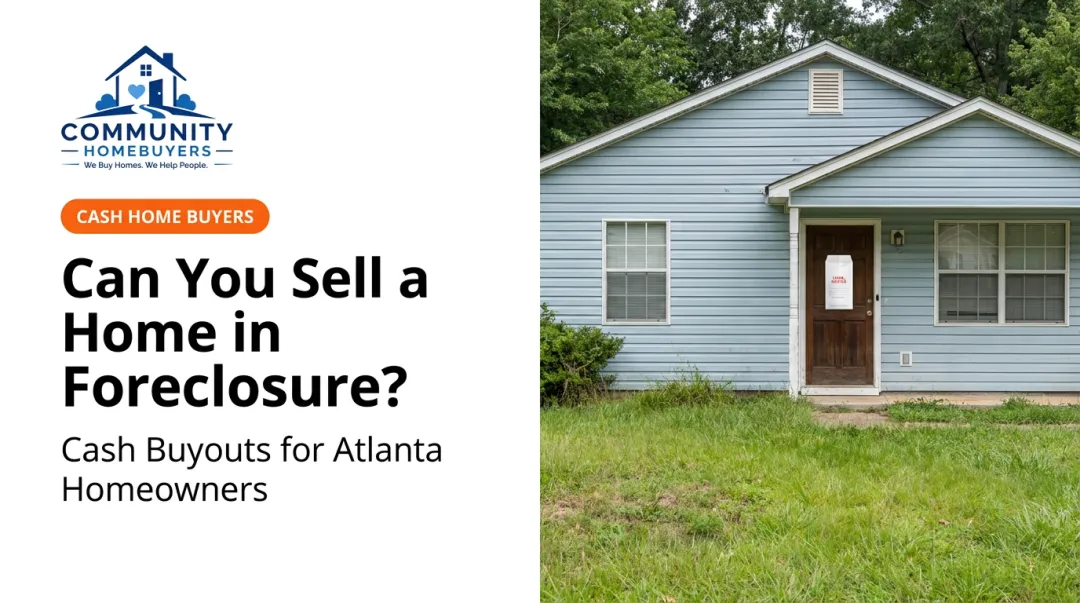

If you're behind on payments, fielding collection calls, or staring at a legal notice you don't fully understand, you're not alone — and you're not out of options. Selling before the auction date is still very possible.
This guide walks through Georgia's foreclosure timeline, the immediate steps to take, how your selling options stack up, and how a direct cash sale can help you close before the auction clock runs out.
Key Takeaways
- Georgia's non-judicial process can reach auction in about 30 days, so early action matters
- A proactive sale usually hurts credit less than foreclosure, which stays on your report for seven years
- Cash sales skip financing and appraisal delays, often closing in 7 days or less
- Confirm your auction date and payoff figure in writing before you decide
- Never sign over your deed or pay upfront fees to a "foreclosure rescue" company
Understanding the Georgia Foreclosure Timeline
Georgia is a non-judicial foreclosure state. That means your lender can foreclose using the power-of-sale clause in your mortgage without ever filing a lawsuit or getting a judge's sign-off. It's one of the fastest foreclosure processes in the country.
Before a sale can happen, the foreclosing party must advertise the Notice of Sale in the county's official legal organ once a week for four consecutive weeks, according to Georgia's Attorney General consumer guidance. Skipping or botching this step can invalidate the sale, but homeowners shouldn't count on a technicality to buy time.
Missed Payments and the Default Stage
Most servicers won't take formal action the moment you miss one payment. Under federal Regulation X, a mortgage servicer generally cannot start the foreclosure process until your loan is more than 120 days delinquent. That said, collection calls and late fees typically start much sooner — often within 30-45 days of a missed payment.

This 120-day window isn't extra time added on top of a Georgia Notice of Sale. It's simply the earliest point a servicer is allowed to begin the formal process.
Notice of Default and Acceleration Letter
Once your servicer decides to move forward, you'll typically receive a default or acceleration letter. This notice usually spells out:
- The total amount owed, including late fees and penalties
- A deadline to "cure" the default and bring the loan current
- A warning that the full loan balance may be accelerated if you don't act
Ignoring this letter is the single biggest mistake homeowners make. It shortens your runway and limits which options — including a sale — remain realistic.
Notice of Sale and Auction Day
Georgia foreclosure auctions happen on the courthouse steps, on the first Tuesday of the month, between 10 a.m. and 4 p.m. State law requires the foreclosing party to notify you directly at least 30 days before that sale date, meaning the entire process can move quickly once it starts.
There's also no post-sale redemption period in Georgia. Once the gavel falls at auction, ownership transfers immediately—you can't buy the house back afterward. That's why selling or otherwise resolving the debt before the sale date matters so much.
Is It Too Late to Sell? Confirm Your Deadline and Take Action
Before assuming your window has closed, get the facts nailed down. Guesswork here can cost you your last real opportunity.
Start with your exact sale date. Call the foreclosing attorney or trustee listed on your notice directly. Don't rely on the date printed weeks earlier, since sales can sometimes be postponed or moved forward.
Next, request two separate figures from your servicer, in writing:
- Reinstatement figure: what it costs to bring the loan current and stop the foreclosure entirely
- Payoff figure: the full amount needed to satisfy the loan if you sell
These numbers are not interchangeable, and confusing them can derail a sale at the closing table.
You'll also need a complete picture of what's attached to the property. That means checking for:
- Second mortgages or home equity lines
- HOA dues or violations
- Property tax liens
- Court judgments against you personally
Finally, get a realistic as-is value for your home rather than assuming repairs come first. Compare that figure to your total payoff and closing costs.
If the numbers fall short, you may be underwater. Talk with your lender about a short sale, since they must approve accepting less than the full balance. You can also sell as-is to a direct cash buyer such as Community Home Buyers of Atlanta, who can often close before the auction date without repairs, showings, or agent fees.

Compare Your Options Before the Foreclosure Auction
Not every selling method fits a compressed foreclosure timeline. Here's how the main paths stack up:
| Option | Typical Timeline | Financing/Appraisal Risk | Fit for Foreclosure Deadlines |
|---|---|---|---|
| MLS Listing (Agent) | Often 60-90+ days from list to close | High — buyer financing can fall through | Rarely fits |
| For Sale By Owner (FSBO) | Highly variable, often 30-90+ days | High — same financing risk, less support | Rarely fits |
| Short Sale | Weeks to months, plus lender approval | Moderate — lender must approve terms | Only if started early |
| Direct Cash Sale | As little as 7 days | Low — no financing or appraisal contingency | Best fit for tight deadlines |
Traditional and FSBO sales both depend on a buyer securing a mortgage, passing an appraisal, and often requesting repairs after inspection. Each of those steps adds weeks. Time you may not have.
A direct cash sale removes those variables. There's no lender approval to wait on and no appraisal contingency that can blow up a deal two weeks before closing. It's one of the few paths that can realistically beat a fast-moving Georgia auction date.
Benefits of Selling Your House Before Foreclosure Completes
Selling before foreclosure completes protects more than your timeline. The outcomes often matter long after closing day.
Key benefits include:
- Less credit damage. A completed foreclosure can stay on your credit report for seven years from the final date. A sale beforehand typically hurts credit less, even if some payments were already missed.
- Control over the sale. You choose the buyer, negotiate the price, and set the timeline instead of a trustee sale deciding all three.
- Lower risk of leftover debt. Georgia lenders can pursue a deficiency judgment after some foreclosure sales when the court confirms the price reflected fair market value. Paying off the loan through a sale sidesteps that risk.
How to Sell Your House Fast in Georgia Before Foreclosure
If your notice has already arrived, here's a straightforward path forward:
- Reach out as early as possible. The moment you know a hardship is coming, start exploring options. More time almost always means more flexibility later.
- Share basic property and loan details. Address, condition, mortgage payoff amount, and your foreclosure notice dates give a buyer enough to start a review.
- Receive a cash offer. A direct buyer like Community Home Buyers of Atlanta can typically turn around a competitive offer within 24 hours of that initial review.
- Choose a closing date that fits your deadline. Closings can happen in as little as 7 days, or on a timeline that works for your situation. Some sellers arrange to stay briefly after closing while they plan their next move.
- Close as-is. No repairs, no cleaning, no showings, no commissions, and no closing costs owed by you.

This process works because a cash buyer isn't waiting on a bank's underwriting department. Funds are already available, which is what makes a 7-day close possible. As a family-owned buyer serving Atlanta, Decatur, Forest Park, and Jonesboro, Community Home Buyers of Atlanta can also work directly with your lender to coordinate payoff ahead of the sale date.
Avoid Foreclosure Rescue Scams
Foreclosure attracts predatory offers, and desperation makes it easy to miss warning signs. Be especially wary of anyone who tells you to stop talking to your lender or servicer. That's rarely, if ever, good advice.
Watch for these red flags:
- Upfront fees before any service is delivered
- Pressure to stop communicating with your lender or servicer
- Deed sign-over or third-party payments instead of paying your mortgage company
- Rushed paperwork with vague or missing terms
- "Guaranteed" foreclosure stops in exchange for money now
Before signing anything, verify the buyer's credibility. Look for reviews, ask for proof of funds, and insist on a clear, written closing timeline. A legitimate cash buyer will not ask you to cut off your lender, and they will answer questions, show proof of funds, and honor a written timeline you can live with.
Frequently Asked Questions
What is the 6-month rule for selling property?
There's no universal "6-month rule" tied to foreclosure. The phrase usually gets mixed up with capital gains residency rules or lender seasoning requirements. Confirm details with a tax professional or your loan servicer.
What is the quickest way to sell my house?
Selling directly to a cash buyer is typically fastest, since it skips listing, showings, financing approval, and appraisal delays. Many cash sales close in as little as 7 days.
How fast can a house go into foreclosure in Georgia?
Georgia's non-judicial process can move from notice to auction in roughly 30 days, which is why early action is so important.
Can I still sell my house after receiving a Notice of Sale in Georgia?
Yes, as long as the sale closes before the scheduled auction date. Notify the trustee or foreclosing attorney once your sale is underway so they can track its progress.
Does selling before foreclosure hurt my credit as much as a completed foreclosure?
No. A proactive sale generally causes less credit damage than a completed foreclosure, which can remain on your credit report for up to seven years.
Can a cash buyer close before my Georgia auction date?
Often, yes. A local direct buyer can typically provide an offer within 24 hours and close in as little as 7 days. Confirm your exact auction date with the trustee first to make sure the timeline lines up.